 Canada

Poker Rules for Beginners: A Grounded Entry Point to the Table
If you have ever watched a Brisbane pub hold a Friday night table and wondered how the betting actually flows, you are not alone. Poker rules for beginners often get buried under dramatic television moments and a lot of jargon that does not help when you are sitting down with a deck of cards. As a slot mathematician and game-design consultant, I have spent years tuning probabilities and pacing so players can read a session instead of guessing at it, and that same mindset applies here: clear mechanics, honest odds, and a pace that lets you learn without burning through your bankroll. The good news is that the core structure is far simpler than it looks, and once you see how the betting rounds, hand rankings, and position work together, the whole game starts to feel like a readable system rather than a mystery.
Reading the Table Before You Put Money In
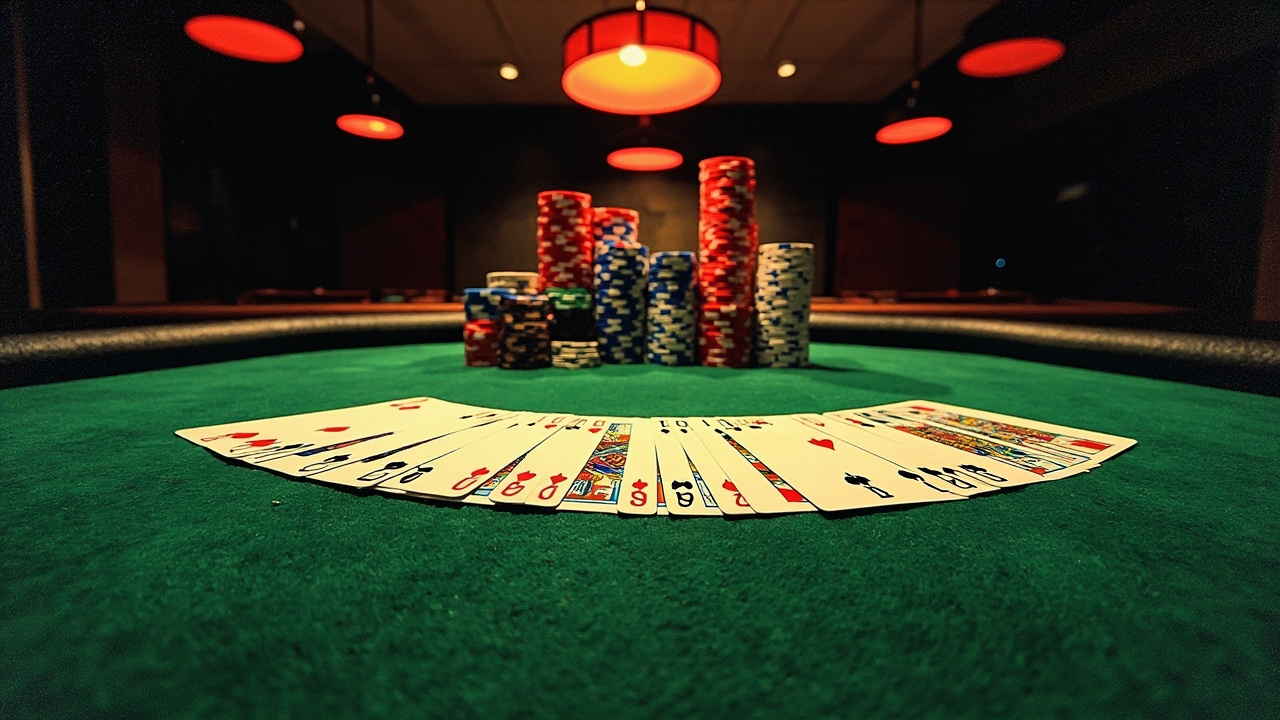
Most new players focus on their own cards first, which is exactly backwards. The real engine of any hand is the sequence of betting rounds and the order in which players act, because that sequence determines who has information and who is guessing. In Texas hold’em, the most common format you will encounter in Australian card rooms and home games, each player receives two private cards and then five community cards are revealed in three stages: the flop, the turn, and the river. Between each stage there is a betting round, and the size of those bets is usually fixed in a limit game or left to the players in a no-limit game. From a design perspective, that structure matters because it gives you multiple decision points where probability, pot size, and opponent behaviour all intersect. If you treat each street as a separate calculation rather than one big swing, you stop reacting to single cards and start reading the shape of the hand. The first practical step is to learn the hand rankings cold, because everything else depends on knowing whether your combination beats what the board is offering. A royal flush sits at the top, followed by straight flushes, four of a kind, full houses, flushes, straights, three of a kind, two pair, one pair, and high card. Once those are automatic, you can spend your mental energy on the parts that actually move money: position, bet sizing, and the odds the board presents on each street. For players who want a longer read on how table mechanics and probability interact before they commit cash, the background material at https://winspirit-online.net/ walks through the same kind of structural thinking that I use when balancing a session around expected value rather than luck. That kind of framing is useful because it keeps you focused on decisions you can repeat, not outcomes you cannot control.
A Step-by-Step Walkthrough for Your First Session
If you are sitting down with a mate who has never played, the fastest way to get them comfortable is to slow the game down and talk through each moment as it happens. Start by dealing two cards face down to each player and explain that these are theirs alone, while everything else that appears on the table belongs to everyone still in the hand. Before any cards are shown, walk through the blinds, which are forced bets that keep the action moving and give every pot a starting value. The player to the left of the dealer posts the small blind and the next player posts the big blind, and those amounts set the minimum wager for the round. Once the blinds are in, the first betting round begins with the player immediately to the left of the big blind, and that is where you explain the three choices every time: fold, call, or raise. Fold means stepping out with no further cost, call means matching the current bet to stay in, and raise means adding more to put pressure on the others. After that first round, deal three community cards face up on the table and call it the flop, then run another betting round starting with the first active player still in the hand. Add the turn card, run the next round, add the river, and run the final round, keeping the same order each time so the group can see how position shifts who acts first. When all betting is finished, players who remain show their best five-card hand using any combination of their two private cards and the five on the table, and the highest valid hand takes the pot. A few simple habits make this much easier to follow: check the board for possible straights and flushes before you fall in love with your own cards, watch whether opponents bet consistently or only on certain streets, and treat your first few sessions as practice in reading patterns rather than chasing big pots. The point is not to play perfectly; it is to build a repeatable routine so the mechanics stop feeling like a blur and start feeling like a sequence you can follow.
How Probability and Table Design Shape Real Play
The reason poker stays interesting over long sessions is that it rewards patience and punishes impulsive swings, which is a very different design philosophy from the instant feedback loop you see in many slot games. When I am tuning a reel set or a bonus trigger, I am balancing hit frequency against payout distribution so the session has a readable shape and the player can tell when they are inside a volatile stretch. Poker works the opposite way around: the uncertainty is concentrated in the cards, but the decisions are concentrated in the player, so the same hand can be a winning play or a losing play depending on how it was approached. That distinction matters for beginners because it shifts the goal from trying to win every pot to making decisions that are profitable over many repetitions. A simple way to think about it is to compare the pot odds you are being offered with the chance your hand improves on the next street, and if the price is right, calling makes sense even when the outcome of that single hand is uncertain. Over time, those edges add up, and that is why position, discipline, and hand selection matter far more than any single lucky card. Brisbane players who run home games or sit in local low-stakes rooms will recognise this quickly, because the same table that feels slow at first becomes a place where patterns emerge: who bluffs too often, who calls too wide, who only raises when they have a strong hand. Those reads are only useful if you give yourself enough rounds to notice them, which is why starting at low stakes and keeping your bet sizes consistent is such a practical habit. It also helps to remember that poker is a social game as much as a mathematical one, and the best tables are the ones where the pace is steady enough that everyone can think. As Zoe Lewis, Independent iGaming Expert at Ironbark Compliance Advisory, puts it, players do best when they treat the rules as a framework for decisions, not a script that guarantees a result. That is a useful reminder, because it keeps the focus on what you can control: your starting hands, your betting rhythm, and your willingness to fold when the odds stop justifying the risk. Chloe Jackson, Head of Analytics at Oceanic Gaming Strategy, notes that beginners who track their own decisions for even a few sessions tend to spot the same recurring mistakes far faster than those who only look at whether they won or lost a particular hand. That kind of self-review is where the real learning happens, because it turns a noisy evening into a pattern you can actually improve.
If you are new to the felt, the most useful thing you can do is keep the first few sessions simple: learn the rankings, respect the betting order, and treat every hand as one decision in a longer run rather than a moment that has to be won right now. The mechanics are straightforward once they stop moving around in your head, and the tables in and around Brisbane are full of players who started exactly where you are, working through the same basics at low stakes and slowly building a feel for when to press and when to step back. No worries if it feels slow at first; the game rewards patience more than speed, and the players who last are the ones who learn to read the table before they try to read the cards.


